How a GEO Technical Expert Sees the AI Search Recommendation Engine
2026-06-23AI technology is disrupting every industry at an unprecedented pace and marketing is no exception. From LLMs to AI agents, and from content generation to decision optimization, this technological shift is fundamentally reshaping how brands connect with users. Within the world of global expansion, every practitioner is grappling with the same challenge: how to translate AI from concept into concrete, quantifiable business value.
That's why we're launching our expert insights column, inviting Tec-Do 2.0's AI technical experts to share frontline experience and deep thinking on large language model applications, intelligent marketing, and algorithm iteration. No empty talk — just real problems and real solutions. We hope this offers something genuinely useful for anyone tracking the intersection of AI and global expansion.
1·Column Introduction
Last week, a friend who works in marketing at a global-facing company messaged me: "We've been doing SEO for five years. Now my boss throws the word 'GEO' at me and asks for a proposal within a week. What even is this?"
My reply: Search is dead. Citation is king.
That's not an exaggeration.
As users grow accustomed to asking ChatGPT, Gemini, Doubao a question and getting an answer on the spot, ranking #1 on a webpage is no longer the finish line for brands. Being The answer AI gives becoming the new goal for optimization.
This is precisely what GEO was born for.
2·What Is GEO?
GEO, or Generative Engine Optimization, was first formally introduced in a 2023 paper by researchers at Princeton University, including Aggarwal and colleagues.
Academic definition:
GEO is a content optimization paradigm designed for AI powered generative search engines. It focuses on adjusting how content is expressed, structured, and presented, in order to increase its visibility, citation probability, and influence within generative engine responses.
In plain terms:
SEO gets you onto the first page one of search results. GEO gets you into an AI's actual answer. Take this example: in the past, a user searching "Tec-Do 2.0 Introduction " would see ten blue links, click through the ones that caught their eye, and form an impression based on what they read.
Today, users are more likely to ask ChatGPT the same question directly and the AI might simply answer: "Tec-Do 2.0 is a representative AI martech company within China's overseas expansion sector, built on a data- and algorithm-driven approach to globalization. At its core, the company's value lies in reducing customer acquisition costs and decision-making complexity for Chinese supply chains and brands navigating global traffic markets."
This example makes the shift clear: in AI-driven search environments, users no longer need to click links and sift through information. The AI draws the conclusion on their behalf.
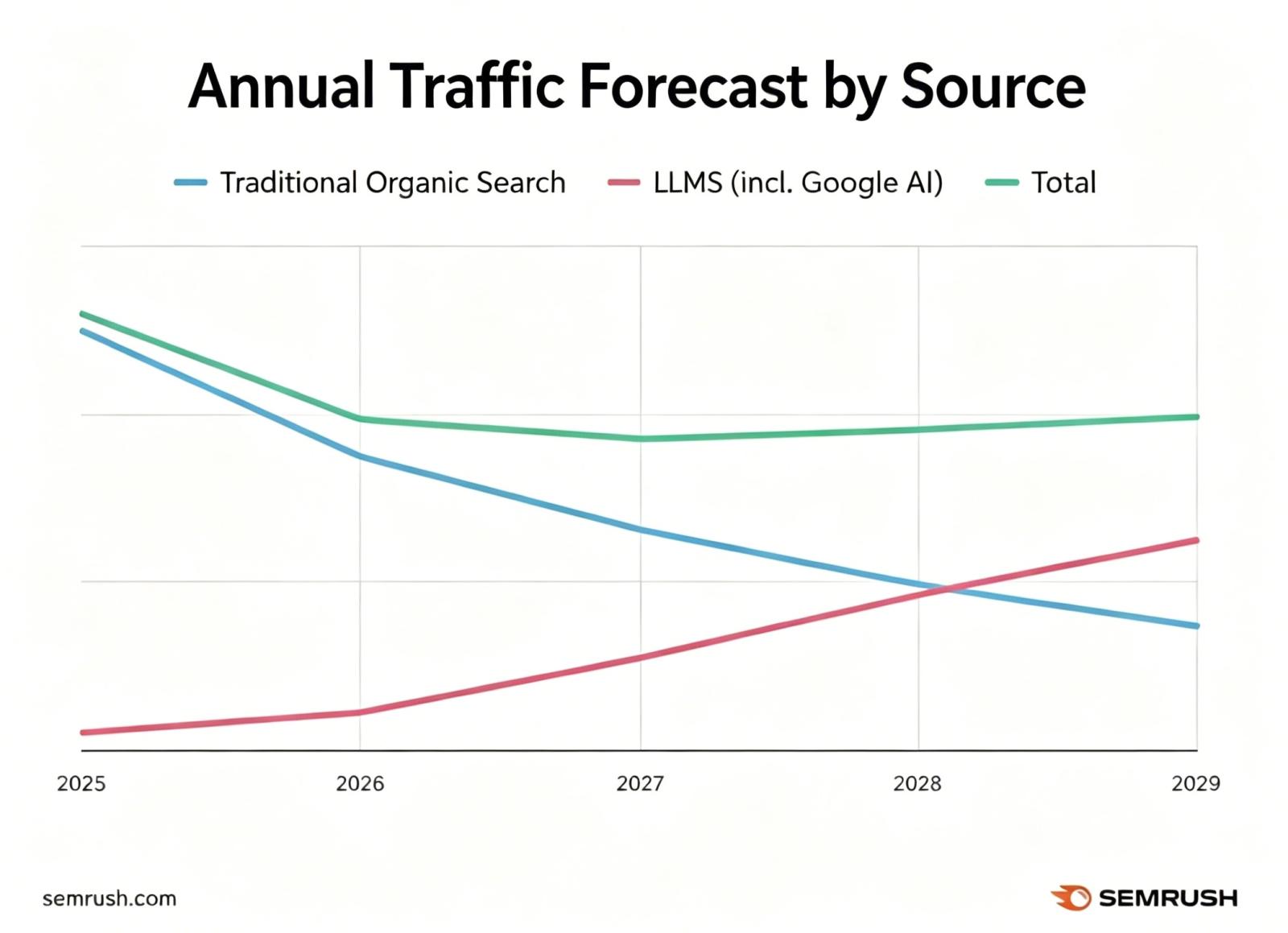
According to analysis from marketing platform SEMRush, AI search engines' market share is growing rapidly, with projections suggesting that by 2028, traffic from traditional search engines and AI search engines will cross over, with AI search ultimately overtaking traditional search.
In response, traditional search engines are already adapting. Google, for example, has not only launched its own large language model, Gemini, but has also begun inserting AI-generated answers directly into search results pages. For more than 90% of user queries, an AI summary module now appears at the very top of the page, serving users an AI-generated answer instead of simply presenting a list of links.
The future of marketing is already here. It's just unevenly distributed. Whether your brand shows up in that AI answer will determine whether you are even considered for the next deal.
3·GEO Is Not "Old Wine in a New Bottle"
A common reaction when people first hear about GEO is: "Isn't this just SEO repackaged, feeding keywords to into AI instead of search engines?"That is not the case.You can't navigate a new continent with an old map.
Traditional SEO is fundamentally about pushing a page to the top of search results. A SaaS brand, for example, wants its blog, product page, or comparison page to appear when someone searches for"best CRM for startups." The focus is on ranking, click-through rate, organic traffic, and conversion paths. The core question is: can user find me us on Google's results page, and will they click through?
GEO, by contrast, is fundamentally about getting AI to include you in its answer, pushing marketing into the realm of mind-share. When a user asks an AI, "What are the best CRM tools for early-stage SaaS startups?" GEO's goal is for the AI to mention your brand by name, describe your positioning accurately, and ideally cite your content as a source. The focus shifts to whether AI understands your brand, trusts your content, and includes you in its recommendations or comparisons.
GEO allows brands to proactively shape user perception at the very moment a need begins to form.
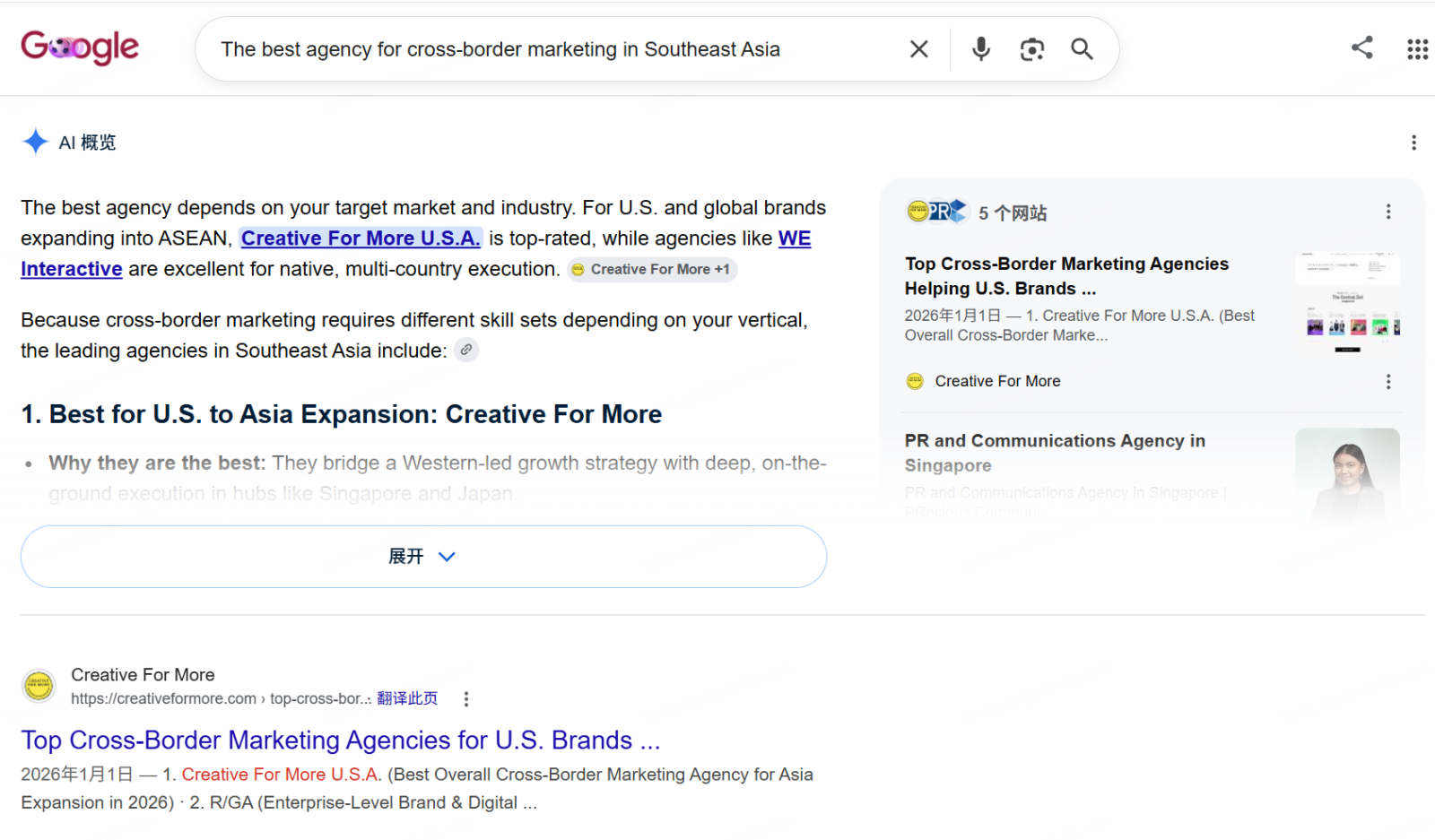
For companies expanding overseas, this shift matters enormously. As the way international users access information changes, marketing teams need to adapt accordingly, no longer optimizing solely for searching rankings, but also for how "understandable, credible, and citable" a brand to AI systems.
SEO is fishing downstream, competing for traffic that already exists. GEO is building infrastructure upstream, at the source — fundamentally shaping the information ecosystem itself, and claiming mindshare before the competition even arrives.
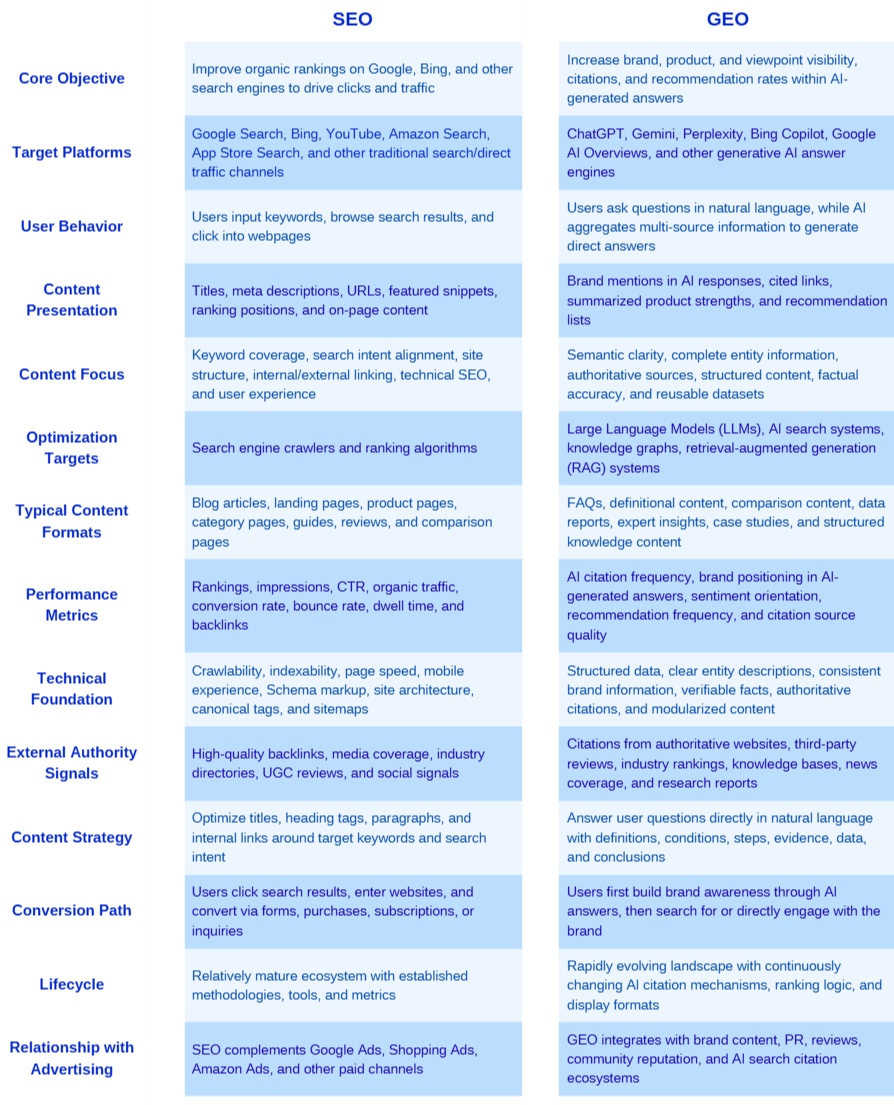
This comparison makes one thing clear: the smart, science-based approach is to treat SEO as the underlying infrastructure, and GEO as the incremental visibility engineering layer for the AI search era. Without solid technical SEO, quality content, and external authority, GEO is difficult to execute well. AI systems still draw their information from public web pages, authoritative media, knowledge bases, communities, and third-party reviews.
4·Where to Start

In practice, the best place to begin is your English-language website. Make sure that your company overview, product pages, industry solution pages, FAQs, customer case studies, pricing pages, integration pages, comparison pages, and help documentation all have clear semantic structure, so they can be crawled, understood, and cited by AI. From there, expand to third-party authoritative channels — industry media, review platforms, partner pages, customer review sites, open-source communities, YouTube explainer content, and LinkedIn posts. This strengthens SEO performance while also increasing the likelihood that AI correctly identifies your brand as a recognized entity.
Closing Thoughts
Marketing paradigms have always evolved alongside traffic paradigms.
Today, GEO is an undeniable trend. It's not simply an upgraded version of SEO — it's a fundamentally new way for your brand to engage with "AI readers." If the past decade was about writing content for people, the next decade will be about writing for both people and AI — with AI acting as an intermediary that reads first, and then tells your story on your behalf.
Whoever serves that intermediary best will be the one earring a seat at the table when the next traffic distribution revolution begins.
The shift from SEO to GEO marks a generational change in how traffic works: in the age of search, the goal was to be found. In the age of AI generation, the goal is to be cited.
Brands that prepare will have an advantage; those that don't will fall behind. Start understanding GEO now, and make sure the next AI answer mentions you.
END